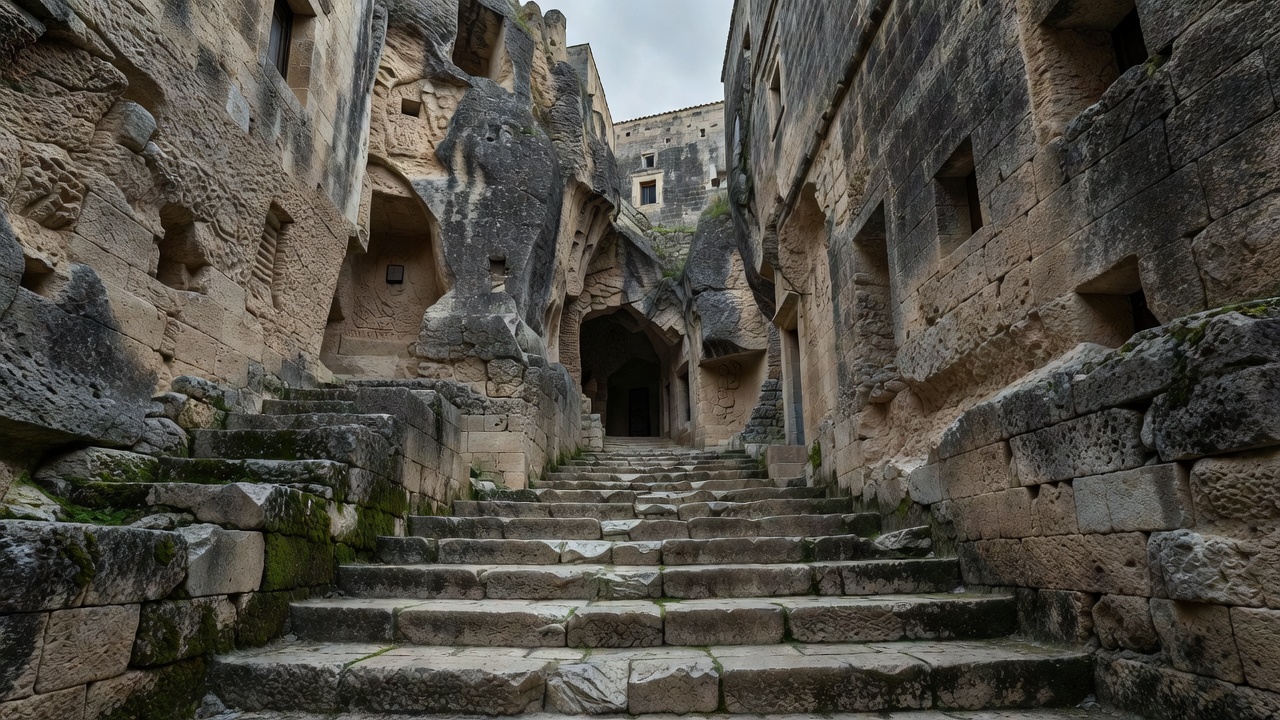
On a map, a cave hotel can appear close to a road, restaurant or landmark. On foot, the same journey may include a steep lane, several flights of stairs and a final threshold inside the room. The distance is only part of the effort. Surface condition, handrails, gradients, lighting and the availability of assistance all affect how an arrival feels after a long journey.
Begin with your own needs rather than with a general label such as “easy access.” A confident walker carrying a small bag and a guest using a mobility aid may experience the same route very differently. Temporary injuries, fatigue, pregnancy and travelling with a child can also change what is comfortable. Specific questions are more productive than assuming that an expensive property must offer a straightforward approach.
Trace one continuous route
Ask the operator to describe the route from the actual vehicle drop-off point to reception, then from reception to the exact room category. Continue the enquiry to breakfast, the restaurant and any facilities you expect to use. A step-free bedroom does not resolve a stepped dining route. A lift serving one part of the property may not serve the entrance you will use.
Where access is important, request measurements and a short video rather than relying on adjectives. Useful details include door clear widths, thresholds, the narrowest turning space and bathroom layout. Explain the dimensions or requirements of your mobility equipment if relevant. Written confirmation helps both parties identify a mismatch before money and travel arrangements are committed.
Luggage and late arrival need their own plan
Historic pedestrian areas can complicate the last part of a transfer. Ask where a driver should stop, whether staff meet arrivals there, and how luggage reaches the room. Establish any assistance hours and charges directly with the property. Do not assume that a luggage service also provides physical assistance to guests, or that it remains available after a delayed flight.
Save the operator’s current arrival instructions before travelling. A map pin may identify reception while vehicle access is elsewhere. If you expect to arrive after dark, ask about path lighting, the check-in procedure and whom to call if you cannot find the entrance. Shoes with a reliable grip are often more useful on historic stone than wheels designed for a smooth terminal floor.
Heritage is a setting, not an exemption
Matera’s Sassi and Cappadocia’s rock sites are protected cultural landscapes with histories extending far beyond their present hospitality uses. Conservation can constrain alterations, but it does not remove the need for clear information. A property should explain what access is actually available rather than asking a guest to infer it from the age of the building.
UNESCO’s descriptions help explain the significance of these places. They do not certify the accessibility, emergency arrangements or legal compliance of an individual hotel. Treat a heritage designation as context for understanding the setting, not as a substitute for practical assurances from the operator.
Heritage context: UNESCO: Matera and UNESCO: Göreme and Cappadocia. Property-specific access must be confirmed directly.
Know the way out as well as the way in
At check-in, ask staff to explain the emergency route from your room and any relevant assistance arrangements. Look at the posted instructions and locate the route while you are unhurried. A dramatic chamber with an unusual plan deserves the same ordinary safety attention as any other unfamiliar accommodation.
If you require assistance during an evacuation, discuss that need before booking and reconfirm it on arrival. Do not assume that the route used for luggage is an emergency route, or that a lift can be used in an emergency. Follow the property’s safety instructions and local requirements. This guide cannot assess the safety of a building from its photographs or marketing description.
Arrive as a temporary neighbour
Rock-cut accommodation can sit within living communities rather than isolated resort grounds. The lane outside your room may also be someone’s route home. Keep voices low late at night, avoid blocking doorways for photographs and respect signs separating guest areas from private property. A beautiful terrace is not necessarily an invitation to enter.
Conservation also begins with small choices inside the room. Do not scratch, mark or detach stone, and follow guidance about candles, incense and products that could stain porous surfaces. Ask staff before moving heavy furniture against historic fabric. These practices are not theatrical reverence for old walls; they are ways to avoid leaving damage in a place that others will inhabit after you.
Finally, preserve some flexibility. A cave stay can offer unusual spatial pleasures, but the most suitable category may not be the deepest, largest or most photographed. The right arrival is one that leaves you with enough ease to notice the stone, rather than spending the first evening recovering from an avoidable obstacle.